
Determining how to become a labor and delivery nurse starts with calling an admissions counselor. If you have prior college education, you may be eligible for an accelerated BSN program. Graduate with a nursing degree and pass the NCLEX-RN licensure exam to start working in labor and delivery nursing.

You can become a labor and delivery nurse by earning a nursing degree and passing the NCLEX-RN. Labor and delivery registered nurses care for patients during and after childbirth and may also care for newborns. If you want a fast-paced specialty focused on maternal and newborn care, learning how to become a labor and delivery nurse is a practical first step.
You can begin your labor and delivery nurse education at Harding University. The accelerated Bachelor of Science in nursing program offers a faster path into nursing for career changers and transfer students. After completing any needed prerequisites, you could earn a Bachelor of Science in nursing in as few as 16 months.
First, review labor and delivery nursing responsibilities and required skills. Then explore how to become a labor and delivery nurse in six steps.
What Is a Labor and Delivery Nurse?
A labor and delivery RN cares for patients during and after childbirth, including newborns. These nurses collaborate with a care team that often includes a certified nurse midwife or obstetrician.
Labor and delivery can involve complications for the patient, the baby or both. L&D nurses must make sound decisions in time-sensitive, high-pressure situations. This need is especially significant in the U.S., which has the highest maternal mortality rate among developed nations and recorded an infant mortality rate of 5.5 per 1,000 live births in 2024. Because labor and delivery can be high-risk, L&D nurses must keep safety at the forefront.
What Does a Labor and Delivery Nurse Do?
Labor and delivery nurse education prepares future nurses to perform the clinical tasks required in L&D settings. Common responsibilities include:
- Administering medications, including drugs for pain management and labor induction
- Assessing the health of the mother and baby
- Assisting with vaginal or cesarean deliveries
- Educating patients and their partners
- Monitoring vital signs
- Monitoring the timing and strength of contractions
- Recognizing signs of complications
L&D nurses also coach patients and provide emotional support throughout labor and delivery.
Where Do Labor and Delivery RNs Work?
Labor and delivery nurses typically work in hospital obstetrics departments. They may also work in standalone birthing centers that provide holistic, wellness-based obstetric care.
Some patients with low-risk pregnancies choose to give birth at home, where they can remain in a familiar environment. L&D nurses may assist with these births.
Nurses can work in a variety of clinical settings, not just hospitals. Read more to learn where nurses work.

Skills Needed for Labor and Delivery Nursing
Labor and delivery RNs need both clinical and interpersonal skills. Important clinical skills include:
- Delivery and surgical assistance
- Electronic fetal monitoring
- Responding to obstetric emergencies and managing complications
- Maternal and neonatal assessments
- Administering medications, particularly those used for pain management and labor induction
- Neonatal resuscitation
Labor and delivery can be emotionally stressful for patients and their partners. Nurses rely on interpersonal skills to support them, including:
- Adaptability
- Communication skills
- Compassion and empathy
- Emotional support
- Teamwork
Critical thinking, time management and problem-solving skills are also important in this nursing specialty.
How to Become a Labor and Delivery Nurse
How to become a labor and delivery nurse begins with earning a nursing degree to be eligible for the RN licensure exam. The first step in the process is to contact an admissions counselor at a nursing program.
1. Complete the Admissions Process
The admission requirements and process vary by program. Applicants without prior college experience may be eligible for an associate’s degree program or a traditional BSN program; however, if you have college experience, an accelerated BSN program might be right for you.
Accelerated programs, such as Harding’s ABSN program, apply the credits earned through a non-nursing bachelor’s degree or college credits toward a BSN. This allows students to graduate faster than through traditional programs. In Harding’s ABSN, students can graduate in as few as 16 months.
If applying to an ABSN, you will have to complete prerequisite courses as part of the admissions process. Prerequisite courses provide the foundation for an ABSN curriculum. Harding requires prerequisite courses in subjects such as statistics, nutrition, anatomy and physiology, lifespan development and microbiology.
Other aspects of the admissions process may include passing an admissions test, completing a background check and submitting letters of recommendation or character references.

2. Earn a Nursing Degree
In nursing school, you will learn foundational nursing theory and concepts, develop essential nursing skills and gain valuable, hands-on patient care experience.
In Harding’s ABSN, students complete online coursework and attend in-person nursing skills and simulation labs. In these labs, they practice fundamental clinical skills, including those used to care for patients during labor and delivery.
You will also complete clinical rotations at nearby health care facilities, where you will practice providing direct patient care under the guidance of clinical instructors and preceptors. Harding students complete clinical shifts in several practice areas, including obstetrics and pediatrics.
3. Pass the NCLEX-RN
After graduating with a nursing degree, you can schedule to take the NCLEX-RN. This licensure exam assesses your knowledge of essential nursing theories and concepts and your ability to determine appropriate clinical responses to patient case studies.
The NCLEX-RN is rigorous, so begin preparing well before graduation. Work through practice questions and take practice exams throughout nursing school.
4. Obtain Your RN License
Passing the NCLEX-RN is required for RN licensure. If you do not pass on your first attempt, you may retake the exam. Passing on your first attempt allows you to begin working as an RN sooner.
5. Gain Labor and Delivery Nursing Experience
After obtaining your RN license, you can apply for labor and delivery nursing positions. While there is no guarantee, a BSN may give you a competitive advantage over applicants with an associate degree. This is because, according to the American Association of Colleges of Nursing, studies have shown that higher rates of BSN-educated nurses in a hospital setting lead to better patient outcomes.
6. Consider Specialty Certification
After gaining L&D experience, you may pursue professional certification. Certifications such as the Obstetric Emergencies, Electronic Fetal Monitoring and Inpatient Obstetric Nursing credentials may support career growth and help you contribute to positive patient outcomes.
The nursing field is filled with opportunities to specialize. Read more to explore some of the many nursing specialties.
How Long Does It Take to Become a Labor and Delivery Nurse?
How long it takes to become a labor and delivery nurse depends largely on your education and chosen pathway. If you have little or no prior college education, an associate’s degree program takes two years, while a traditional BSN program typically takes four years.
If you have a non-nursing bachelor’s degree or at least 64 college credits, you may qualify for Harding’s ABSN program. After completing any needed prerequisites, you could graduate in as few as 16 months. Most future nurses take the NCLEX-RN one or two months after graduation.
Depending on your starting point, becoming an L&D nurse may take less than two years or slightly more than four years.
Labor and Delivery Nurse Salary and Career Outlook
According to the U.S. Bureau of Labor Statistics, the median annual salary for RNs was $97,550 in May 2025. RN employment is projected to grow by 6% from 2025 to 2035, faster than the average for all occupations.
The BLS does not report labor and delivery nurse salary data separately, but its RN employment data can provide context as you plan your career.
Is Labor and Delivery Nursing Right for You?
L&D nursing may suit you if you are passionate about maternal and neonatal health. Consider whether you:
- Can share joyful moments with new parents while remaining alert to the risks of labor and delivery
- Work well on a collaborative team
- Provide effective emotional support
- Pay close attention to detail and recognize warning signs
- Perform effectively in high-pressure, high-stress situations
Start Your Nursing Career With Harding University
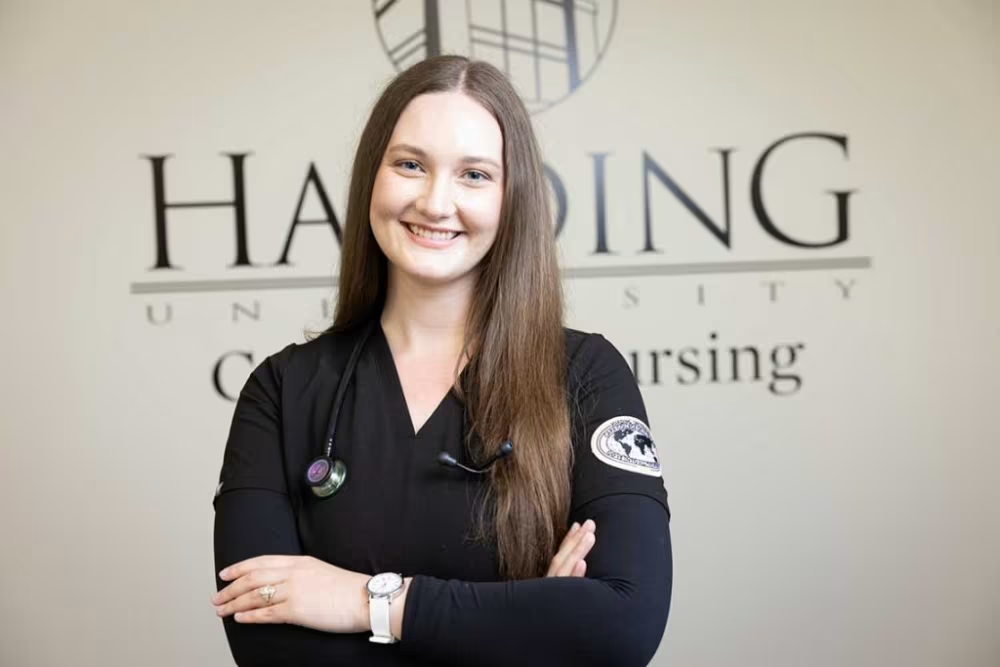
Harding University can help you meet the education requirements for a labor and delivery nurse through its accelerated BSN program. After completing any needed prerequisites, you can graduate in as few as 16 months while benefiting from a community-minded approach and a values-based curriculum. Harding prepares nursing students to care for patients in body, mind and soul.
Request info today and connect with an admissions counselor to learn more about the ABSN program.