
Nurses work across a range of hospital departments, including emergency rooms, intensive care units, orthopedics and labor and delivery. Outside the hospital, they can work in schools, community health centers, physicians’ offices and substance abuse treatment centers. Unique settings include cruise ships and amusement parks.
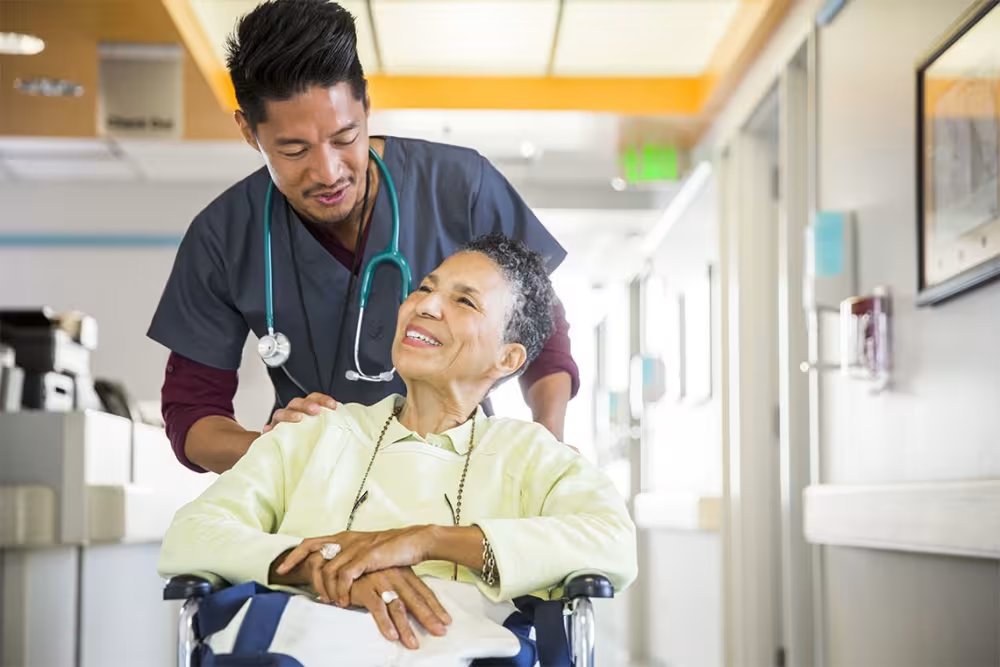
Nurses work in a variety of traditional, emerging and unique health care settings. Where can you work as a nurse? You might pursue roles in hospital departments such as orthopedics, the emergency room or the intensive care unit. Where do nurses work outside the hospital? Common settings include outpatient care centers, private homes, corporations and more.
Where can you work as an RN? Your options are broad, but you’ll first need to earn a nursing degree. At Harding University, you could graduate in as few as 16 months from our accelerated Bachelor of Science in nursing program if you have a non-nursing bachelor’s degree or at least 64 college credits. After graduation, you’ll be prepared to take the NCLEX-RN licensure exam and begin pursuing your first nursing position.
As you plan your career path, consider the question, “Where do nurses work?” Explore hospital departments and specialties and learn about roles beyond the hospital, including emerging and unique areas of nursing.
Hospital Settings Where Nurses Provide Patient Care
A hospital functions as an ecosystem, with many departments working together to support patients. For example, a patient may begin treatment in the emergency room or trauma center, then be transferred to the ICU and then move to a step-down unit before discharge.
Where can nurses work in a hospital? Nurses work across departments, from the emergency room to the surgical suite and beyond. Their responsibilities often depend on the department.
Emergency room nurses, for instance, provide stabilizing care for serious and life-threatening conditions, typically treating patients for a brief period. In a medical-surgical unit, RNs help patients recover from surgery, illness and injury, often caring for the same patients for days or weeks.
Hospital departments where you might work as an RN include:
- Cardiology
- Critical care or ICU
- Labor and delivery
- Neurology
- Oncology
- Operating room
- Pediatrics
- Post-anesthesia care unit
- Psychiatry

Where Can Nurses Work Outside of Hospitals?
Nurses also have many options outside the hospital. Many work in physicians’ offices, including primary care practices and specialty offices such as gastroenterology, urology, neurology and orthopedics. Others work in outpatient treatment centers, including:
- Birthing centers
- Oncology treatment centers
- Substance abuse treatment centers
- Urgent care
Some nurses provide home health or hospice care in private homes. Others work for corporations and distribution centers, delivering workplace health services to employees. Nurses may also serve as consultants or employees at law firms, offering clinical expertise to legal teams handling health-related cases.
Community and Public Health Settings Where Nurses Work
Nurses may also work in community settings, including community health clinics serving underserved populations.
Public health nurses work in state, county or city health departments. These departments analyze public health data, track trends and develop public awareness campaigns. They also educate communities about health concerns and may provide services such as vaccinations and screenings.
Other community-based settings where nurses work include schools and correctional facilities. School nurses provide first aid, health screenings and chronic condition management. Nurses in correctional facilities provide preventive services, conduct health assessments and treat acute illnesses and injuries.

Explore the nursing specialty of telehealth nursing.
Emerging Areas Where Nurses Work Today
Many emerging nursing roles and settings rely on technology. Telehealth nursing, for example, uses telecommunications equipment and HIPAA-compliant platforms to deliver care remotely. These positions may require prior bedside experience so nurses can develop the clinical judgment needed to assess and support patients remotely.
Informatics nursing is another specialty centered on health care technology. Informatics nurses combine information technology, data management and nursing science to help reduce medical errors and improve care delivery. They may work in hospitals, information technology companies or software development organizations.
Where Can RNs Work in Unique and Specialized Settings?
Registered nurses can also work in specialized settings beyond hospitals and outpatient clinics, including faith communities.
Parish nurses are RNs who provide health and spiritual care in faith-based settings. They may conduct health screenings for congregation members or visit community members who are ill. They may also lead educational sessions about health topics such as nutrition and exercise.
Other unique and specialized settings for RNs include:
- Amusement parks: Supporting guest safety and providing first aid and emergency care
- Cruise ships: Providing nursing care, including first aid, to guests aboard cruise ships
- Hyperbaric treatment centers: Monitoring patients throughout hyperbaric oxygen therapy
- Oil rigs: Providing essential health services to workers at offshore drilling facilities
Mobile nurses travel wherever care is needed, including private homes and offices. Event nurses fill a similar role by providing short-term care at festivals, ultramarathons, conventions and other events.
Prepare for your first nursing interview by reviewing common interview questions.

Nursing Job Outlook Across Health Care Settings
According to the U.S. Bureau of Labor Statistics, employment of registered nurses is projected to grow by 5% from 2024 to 2034. The BLS projects employment growth across several health care settings, including hospitals, outpatient treatment centers, residential and long-term care facilities and home health agencies.
How Harding University’s ABSN Prepares You for Diverse Nursing Environments
Where can you work as an RN after graduating from Harding? With a BSN from Harding and RN licensure, you can pursue opportunities in many health care settings. Some specialized roles, such as nursing aboard emergency medical evacuation flights, require prior clinical experience.
Harding’s ABSN prepares you for nursing roles in and beyond the hospital through a comprehensive curriculum and experiential learning. Along with online coursework in nursing theory, you’ll participate in nursing skills and simulation labs to develop essential clinical skills.
You’ll also complete a series of clinical rotations at Northwest Arkansas health care facilities, gaining experience interacting with and caring for patients. After graduation, you can pursue RN licensure and begin applying your education in a health care setting.

Start Your Nursing Journey at Harding University
Wherever you choose to work as a registered nurse, Harding University can help you build a foundation for your career. The Carr College of Nursing developed a values-based curriculum that delivers a community-minded education, preparing graduates to lead with integrity and provide holistic patient care.
Request info today and connect with an admissions counselor at Harding to learn more and plan your next steps.