
Understanding the difference between ABSN vs. BSN programs is important. An ABSN is an accelerated BSN program designed for career changers and transfer students and can be completed in less than two years. A traditional BSN program is a four-year program for students with a high school diploma or GED.
The first step in becoming a nurse is enrolling in a nursing program, but which is the right fit for you? You’ll find that many paths lead to a nursing career, but they’re not all the same. If earning a Bachelor of Science in nursing would fit your career goals, the next decision is to choose between an ABSN vs. BSN program. While both pathways lead to becoming a registered nurse, they are designed for different educational backgrounds and timelines.
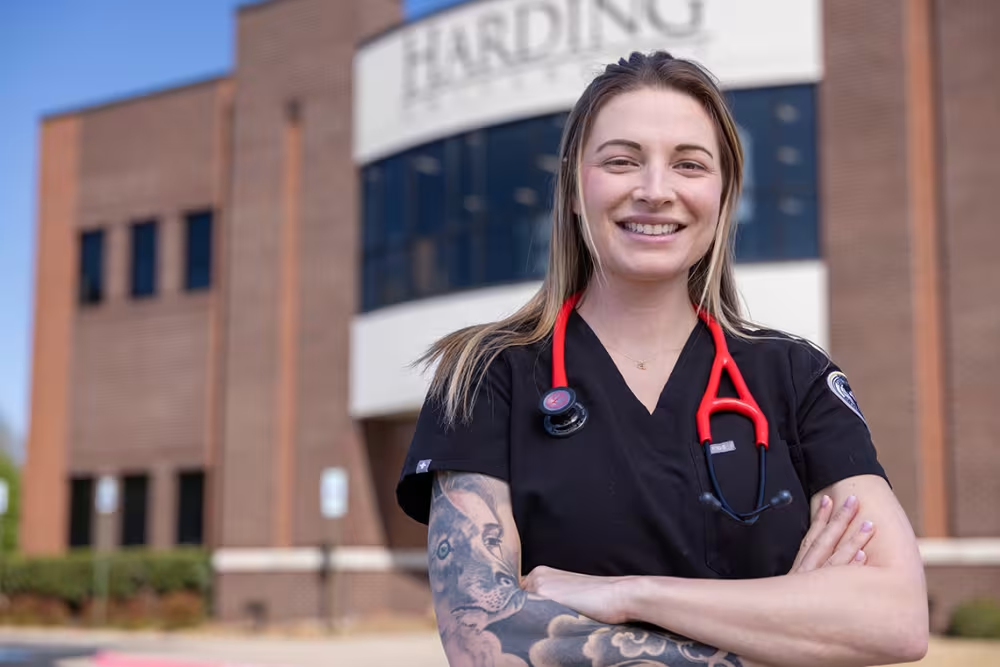
At Harding University, the accelerated Bachelor of Science in nursing program is designed to help career changers leverage their academic experience to earn a BSN. Students can graduate in as few as 16 months, prepared for the licensure exam and to quickly enter the nursing workforce.
Before choosing a nursing program, you will need to explore available options. Understanding the differences between these two nursing degree programs can help you determine which path best fits your experience, schedule and long-term aspirations.
What is a BSN?
BSN stands for Bachelor of Science in nursing, one of the degree options that can lead to nursing licensure and an RN career.
While it’s also possible to earn a nursing license after completing an associate degree in nursing program, the curriculum is far less comprehensive than a BSN curriculum. According to the American Association of Colleges of Nursing, studies have shown that a BSN education contributes to better patient outcomes.
Another benefit of earning a BSN is that it paves the way for graduate-level nursing education. As the minimum degree requirement for Master of Science in nursing and Doctor of Nursing Practice programs, earning a BSN prepares you to pursue career advancement later in your career.

Discover the steps you must take to become an RN.
What is an ABSN?
ABSN stands for accelerated Bachelor of Science in nursing. It is not a degree, but rather a program that allows non-traditional students who have earned a non-nursing bachelor’s degree or a certain number of college credits to earn a BSN faster than through traditional programs.
ABSN programs offer the same quality education you’d expect from a traditional program. Because ABSN programs build on students’ pre-existing degrees or credits, the curriculum focuses primarily on the advanced nursing and science courses you would learn in the latter half of a traditional BSN program.
This makes it an ideal option for people interested in transitioning to a second career after being in the workforce. It’s also a good option for transfer students who started earning a non-nursing degree but decided to switch to nursing.
At Harding University, applicants with a minimum of 64 non-nursing college credits from an accredited institution are eligible for the ABSN program, provided they meet the other admissions requirements.
ABSN vs. BSN: Key Differences at a Glance
While both traditional and accelerated programs deliver the same quality of education and preparation, there are key differences. At a glance, the most significant difference between program types is the time to graduation.
In a traditional program, you can expect to graduate in about four years, while in an accelerated program, you can expect to graduate in less than two years. At Harding University, ABSN students can graduate in as few as 16 months.
BSN vs. ABSN Requirements: Who Qualifies for Each Program?
Each school establishes its own unique requirements, so you must examine each carefully when determining which is best for you; however, there are similarities across basic requirements.
In general, a traditional BSN program requires a high school diploma or GED. You may also need to take an entrance exam, such as the SAT. BSN programs generally consider the following when making admissions decisions:
- Cumulative high school GPA
- Extracurricular activities
- Leadership roles
- Volunteer positions

Since ABSN programs are designed for transfer students or people making a career change to nursing, applicants will need more academic experience than a high school diploma or GED. Some accelerated programs require applicants to hold a bachelor’s degree, while others are also open to applicants with a certain number of college credits. Applicants might also need to pass an admissions exam, but the type varies.
At Harding, our ABSN admissions requirements include:
- A non-nursing bachelor’s degree or at least 64 credit hours
- A 2.5 cumulative GPA
- Completion of all six components of the HESI Admission Assessment Exam
- Passing a criminal background check
- One academic or professional character reference
Prerequisites
You will need a strong general education and science foundation to enroll in an ABSN, meaning you may have to complete prerequisite courses before applying. This is to ensure that all students are prepared for the ABSN curriculum. In traditional BSN programs, prerequisite courses are part of the curriculum and are completed during the program.
Nursing school prerequisites vary from one program to the next. At Harding, you’ll need to complete prerequisites such as:
- Anatomy and Physiology
- Chemistry
- General Psychology
- Lifespan Human Development
- Microbiology
You might have already completed some or all of the prerequisites in your previous degree program. Your admissions counselor will review your transcripts and identify which credits are transferable and help you enroll in the remaining courses.

Clinicals are a critical part of a nursing education. Prepare for nursing school by learning what nursing clinicals are like.
Traditional BSN vs. Accelerated BSN: Program Structure and Timeline
While specifics vary across programs, you would generally see the following differences between traditional BSN and ABSN programs:
- Start Dates: While start dates vary, traditional BSN programs typically offer two start dates per year, while ABSN programs typically offer three, providing flexibility for applicants. Harding’s ABSN offers three start dates a year in January, May and August.
- Curriculum: The traditional BSN curriculum covers general education in the first half of school and nursing courses in the latter half. An ABSN curriculum, on the other hand, focuses primarily on advanced nursing and science courses because of the accelerated timeline.
- Online Learning: Because ABSN programs are accelerated, some offer online coursework in addition to hands-on nursing labs and in-person clinical rotations, such as Harding’s ABSN. Traditional BSN programs are most often entirely in-person.
- Class Sizes: Because ABSN programs are designed for non-traditional students and offer multiple start dates a year, they can accommodate small class sizes allowing students to receive personalized attention from instructors.
ABSN vs. BSN Salary Expectations
Your BSN program will not influence salary expectations. Because ABSN programs confer a BSN and offer the same quality of education, you can expect to earn the same as you would if you graduated from a traditional program.
According to the U.S. Bureau of Labor Statistics, registered nurses in the U.S. earned a median annual salary of $93,600 as of May 2024. Individual salary expectations can vary based on nursing specialty, geographic location, years of experience and other factors.

Why Choose Harding University’s ABSN Program?
If you want to change careers or degree path to nursing, Harding University’s ABSN program can help you make the transition. By earning a BSN in as few as 16 months, you can prepare yourself to enter the nursing workforce faster than through traditional BSN programs.
Through comprehensive nursing coursework, delivered on a flexible online learning platform, hands-on skills training in high-tech nursing labs and real-world clinical placements at Northwest Arkansas health care facilities, the ABSN program prepares you for a rewarding nursing career. Upon graduation, students are ready to take the NCLEX-RN with confidence.
With three start dates a year, you can start sooner than you may think. Request info today to learn more and receive step-by-step guidance through the admissions process.